You are in a class war (whether you like it or not)
The "no politics at work" vibe (often the wise choice) has led many leaders to miss the socio-economic forces changing the culture of their teams. Subtle and strange battle lines are being drawn. And it's all about class—no ascension to Marxism required.

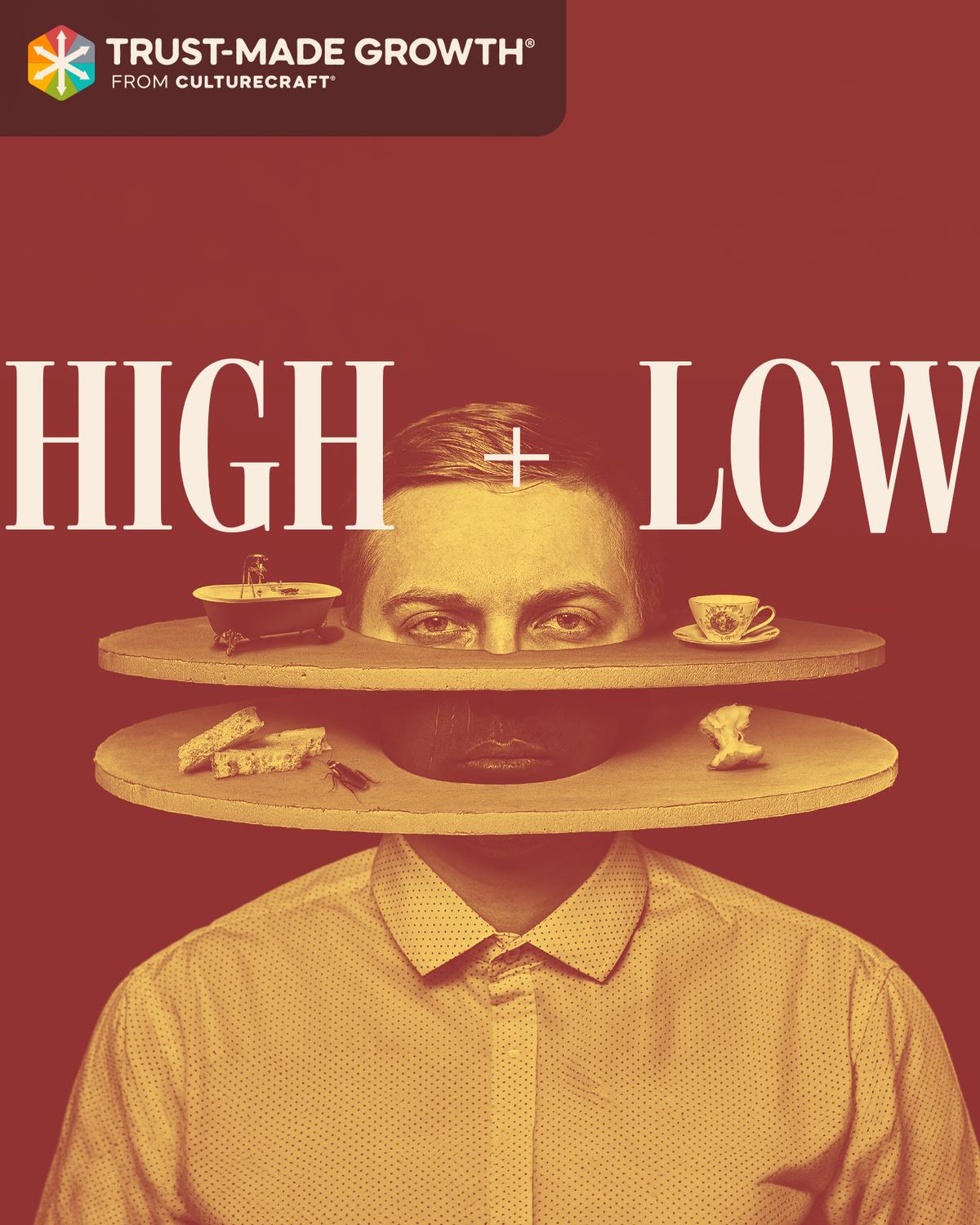
How the class dynamics of the AI explosion are impacting every venture and what to do about it
TL;DR - It's been a hot minute since we did a deep dive on the state of things (waves hands broadly) and addresses the current elephant in the current room. The "no politics at work" vibe (often the wise choice) has led many leaders to miss the socio-economic forces changing the culture of their teams. Subtle and strange battle lines are being drawn. And it's all about class—no ascension to Marxism required.
It's easy to roll your eyes at one more Substack about "the billionaires" and what they should do, shouldn't do, or which level of hell they belong in. Readers of this newsletter will know that I am guilty as any at finding the Zucks & Co to be easy fodder for humor and avatars for scaled foolishness.
You could join in on a recent very strange Substack zeitgeist where people were up in arms about whether "reading" was classist. Or watch one more Apple TV dramedy about rich people behaving badly.
Look around, and you start to see it, more than most leaders I work with are comfortable with: everything is class now. And every venture and leader is in the middle of it. Class is a structural reality reshaping the economy you're trying to build a venture inside of, right now, whether or not you've named it that way.
A lot of folks think of class as some kind of 20th century antiquated war between socialism and capitalism, and that's an unfortunate error. For better or worse, If you're running a venture of any size, the side of this war you're on has already been decided for you. The question is whether you're going to operate with that awareness or without it.
Three classes and none of them are "the middle one"
The AI economy is sorting people and ventures into three groups, and the sorting is accelerating:
The Platform Class owns the infrastructure. The compute. The models. The platforms. The Googles and Metas and Microsofts, yes, but also the enterprises with capital to buy licenses at scale, build proprietary data moats, and hire the engineers who know how to work at that layer. The efficiency obsessed who expect AI makes labor 10x faster retain the spoils of the 10x. In 2025, AI firms captured 61% of all global venture capital, almost $260 billion. By Q1 2026, that share had climbed to 80%. The rest of the world's ventures competed for what was left.
The Disrupted Class owns the past. The big banks. The legacy businesses. The media companies. Wells Fargo, UPS, and Charles Schwab. Or a Disney, the most powerful media company in the world, whose stock hasn't moved in a decade and recently announcing their intent to use AI to "monetize their IP" in every way possible (princesses swoon). These guys used to be in the Platform class. They used to the megacorps that economy stood on. And they resent the displacement. They are the ones laying off 10s of thousands to improve their "revenue efficiency ratio."
The Underclass is everyone being replaced, or perceived of being replaced. Given the scale of the threat that Silicon Valley leaders have been leveraging—last week the Microsoft AI chief threatened an 12-month timeline for all white-collar workers—the class is expanding by the day. So many of these draconian ticking clocks have come and gone. We all have good reason to side eye. But the Vox Populi is making its voice heard. 44% of Gen Z workers, when threatened with layoffs if they don't adopt AI, started actively sabotaging the company's AI efforts. The booing of former Google CEO, Eric Schmidt, as he pontificated for AI optimism at last week's University of Arizona commencement is a sign of the times.
Only one small (and vocal) subset of this group is the creator subclass, whose demise has been threatened on a near annual basis for years. They may live on, but pricing pressures and dramatic compression of the value chain, are stirring revolt. Copywriters who charge what they charged in 2019, now with twice the output. Designers producing deliverables an AI can produce in a day, and trying to argue for the ephemeral value of "quality." Developers doing work that tools have made nearly instantaneous. This group is not failing because they're not talented. The floor dropped out from under the pricing model their entire practice was built on, producing a 13% decline in employment, to say nothing of the revenue compression for agencies and solos.
Most of the people reading this sit somewhere between group two and group three, and don't know which side they're actually on yet, and there in lies the rub.
Every technology wave does this
The printing press, the industrial revolution, the internet all produced periods of rapid wealth concentration at the top, chaos in the middle, and structural displacement at the bottom.
The scope of this one is different. Previous waves mostly automated physical or repetitive cognitive labor. This one is eating the work that knowledge workers spent a decade positioning themselves above the automation line to do. Writing. Research. Analysis. Design. Coding. Strategic synthesis. And powered by the elite media machine that platforms every word that Sam Altman or Dario Amodei says as if Moses has returned from Mt. Sinai, and the reaction of the populace starts to make a lot of sense.
Add to this the rising and a impossible to predict cost of compute and AI tokenization mess where use is now measured in volume rather than effect, in a dumb-as-shit phenomenon called tokenmaxxing... and it's clear that we are in something other than a historical rhyme.
It's very easy to look at all of this and think: oh that's crazy out there. But in here, we're just getting people some Claude logins, some meeting transcripts. But your team is consuming the same media landscape you are. So are your clients. And they are paying very, very close attention to where you're gonna land.
But which class am I?
Most founders and leaders aren't thinking about this in class terms. They're thinking about it in competitive terms: which AI tools should I use, how do I stay current, am I using this enough, am I using it wrong?
Those are real questions. They're downstream of the structural one, which is: what is the actual source of value in my venture, and is AI helping me deliver more of it — or hollowing it out while I'm not looking?
The leaders I work with look at the three classes listed above and feel they don't fit anywhere. They don't own the platforms. They don't have the capital security (or the mass layoffs) of the disrupted firms. They feel like their under the same pressures as everyone else in the fight for the AI-shaped future.
But that's not how they're perceived. By virtue of the C in the title, or their ownership of the venture, leaders are always perceived in one of the two overclasses – platform or disrupted. And with the rush to implement AI anywhere and everywhere, without strategic intent, too many leaders start to look like the "trade efficiency for anything and everything" Disrupted class their employees and clients are fearful they are.
What this looks like in ventures
Commoditization of the deliverable. When your client can get a version of what you make in fifteen minutes with a prompt, your value is no longer in the thing you make. Efficiency obsession may look like competitiveness, but it's also teaching your team and your clients that you'll do anything to maximize margins.
The trust vacuum. AI is extraordinarily good at producing content that sounds authoritative and is occasionally wrong in ways that are hard to detect without domain expertise. This is creating a trust problem at scale. We already live in the least-trusting society in modern history. That distrust is the internal language of corporate culture now. The default position? Unless otherwise notified: nobody's on nobody's side.
The human drain. Mass headcount reductions on AI efficiency projections has turned nearly every W2 employee into an always on threat monitor. Do you value my work? When you ask me to use this AI tool is it because you want to replace me? Why isn't David here anymore? And while the data still doesn't support the P&L benefits of mass AI adoption, leaders are rushing to it for fear of being left behind. The team can feel that fear. The clients can feel it. It's the new aura around so, so, so many enterprises. Inside the company it sounds like "CEO Mark just doesn't believe in us anymore. All he wants to do is survive."
Erratic class performances. Every team member experiences the AI pressures through their unique lens. Some see it as an opportunity to get ahead. Some see it as an existential threat. Some don't see "it" at all, they just feel the atmospheric pressure that the AI shifts have produced. The head of accounting is vibe coding a paperwork intake app. Your chief of staff is using CoWork to speed through tasks. The top sales guy got tired of waiting on marketing and fed every document into ChatGPT and is now mass producing outbound emails that are (depending on your perspective) "on message." Is any of this keeping your data secure? Your processes clear? Who knows. People will do a lot to prove their the member of the underclass who should be saved when the proverbial ship goes down.
What to do instead
Most analysis like this ends one of two ways: a panic piece: your whole business model is doomed! or a hustle piece: here are six ways to leverage AI before your competitors do. Neither of those is honest. Here's what I'm coaching our founders to understand and implement:
- Accept the Class constraint. As the person who writes the checks and will benefit the most on a future sale of the business, you are not in the same class as your team. There is no way to construct the business (unless you move to an equally weighted ESOP or a co-op model) to not be the winner at the end of the monopoly game. In today's climate that's gonna produce a barrier. It doesn't matter how nice, moral, considerate, or generous you are.
- Build like trust is the scarce resource. Because it is. Every decision about what you automate and what you don't, what you outsource and what you hold, what you publish and what you protect — consider how it will be received by people on threat-monitor for their eventual replacement by AI. Even team members who don't have the words will likely show up with greater defensiveness about their work and its value.
- Make AI decisions collaboratively. Either leverage a highly skilled internal leader or bring in someone from the outside to facilitate your strategic planning around AI in cross-functional working groups. Ground it in your core values. Invite participation from across the org. Tie the work to something bigger than survival or efficiency. Neither of which engenders loyalty or trust. Trade, "We're rolling out our AI initiative, here's the expectatation" with "We're going to spend the next four weeks discussing with all of you where the AI opportunities are, what the downstream effects will be, and how to prioritize our customers together."
- Be one notch more transparent. About everything. Apropos of #2, your team (and your customers) are living in the same nerve-damaged time of uncertainty you are. They feel the same weariness, moments of loneliness, anxiety about the future that you feel. But the gift of the leader is to turn your feelings of vulnerability into courage. By saying, "We don't know everything, but here's what we do know and what you can expect from us in the next steps," you speak to those trustbroken, reactive places in everyone you serve and serve with, to start laying down new foundations of.trust.
Welcome to the permanent uncertainty
The class dynamics of this moment are not going to self-correct. The people with capital and infrastructure are going to keep accumulating. The people with the capacity to grow and engender trust and genuine expertise have a window to build something durable and relationally-focused while all eyes are on the hyper-efficiency game. Gentleness, over-communication, intention, and the gift of attention will be prime differentiators. Do the things that will never make a dashboard or a ROI calculation. And do them well.
The extraction systems that seep into every economy has been operating this way for decades. For better or worse, the current K-shaped economy produces battle lines of real and perceived class everywhere.
Don't try to prove you're exempt from these widening class dynamics. Show grace and understanding when people's attention to class difference (income, disposable wealth, access to luxuries) is part of the normal discourse. Recognize that almost any AI action implies class disparity.
And then get down to the trench work of building trust one conversation, one person, one transparent, methodical and intentional decision at a time.
Nick Richtsmeier is a strategist and the founder of CultureCraft® and Trust-Made Growth®. He works with founders, leaders, and fractionals who are building resilient ventures in the trustbroken economy. You can get to know his work on Trust-Made Growth® more in-depth at CultureCraft.com.