AI detection is the wrong fight, and it may cost us the one worth fighting
AI detection is the wrong fight. It’s a virtue signal in the midst of a war for the fundamentals of how to build an economy. A rainbow logo you roll out every June 1. And, it doesn’t work. The internet loves a virtue signal, obsesses over moral victories, but its true passion is a witch hunt.

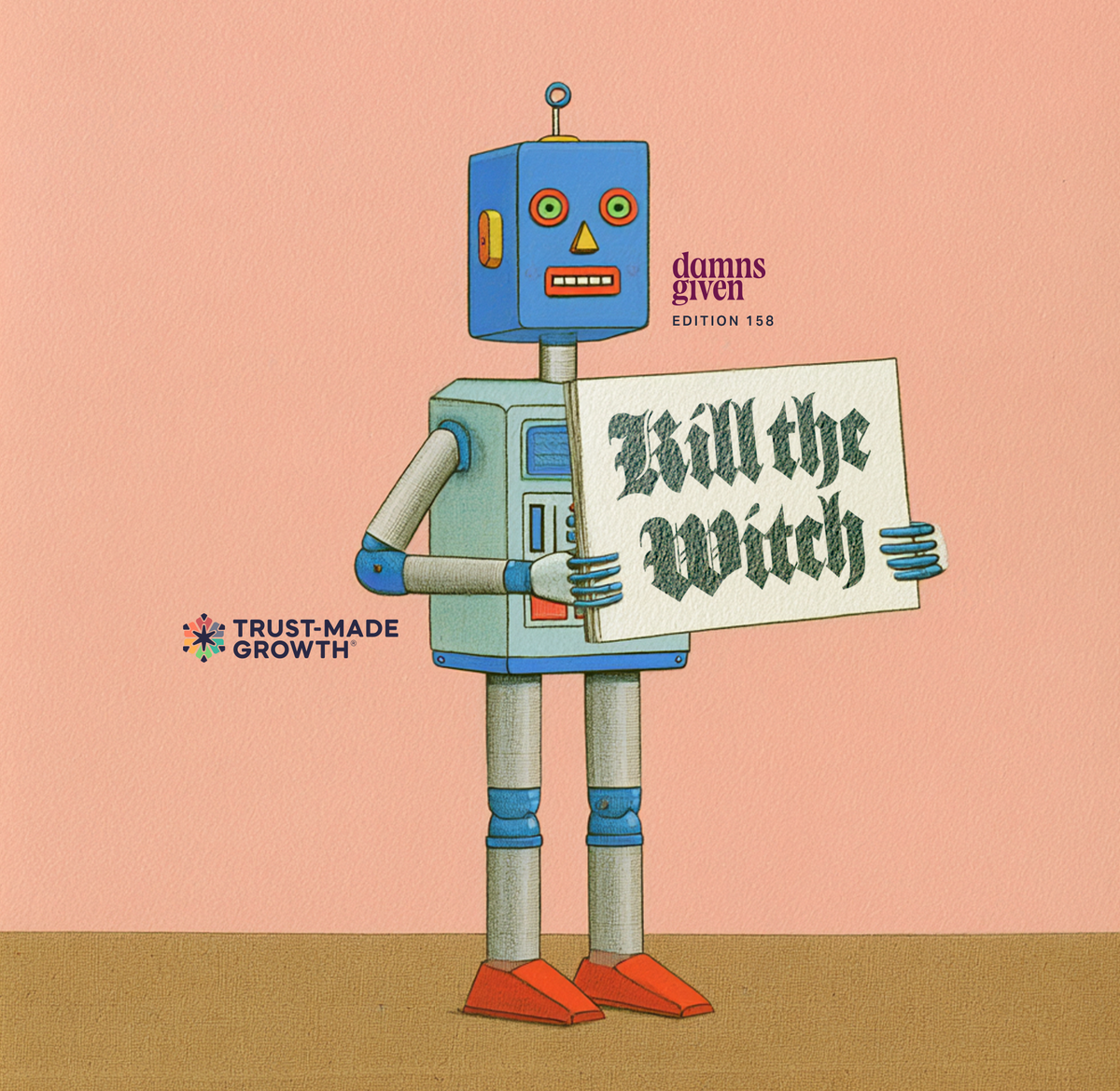
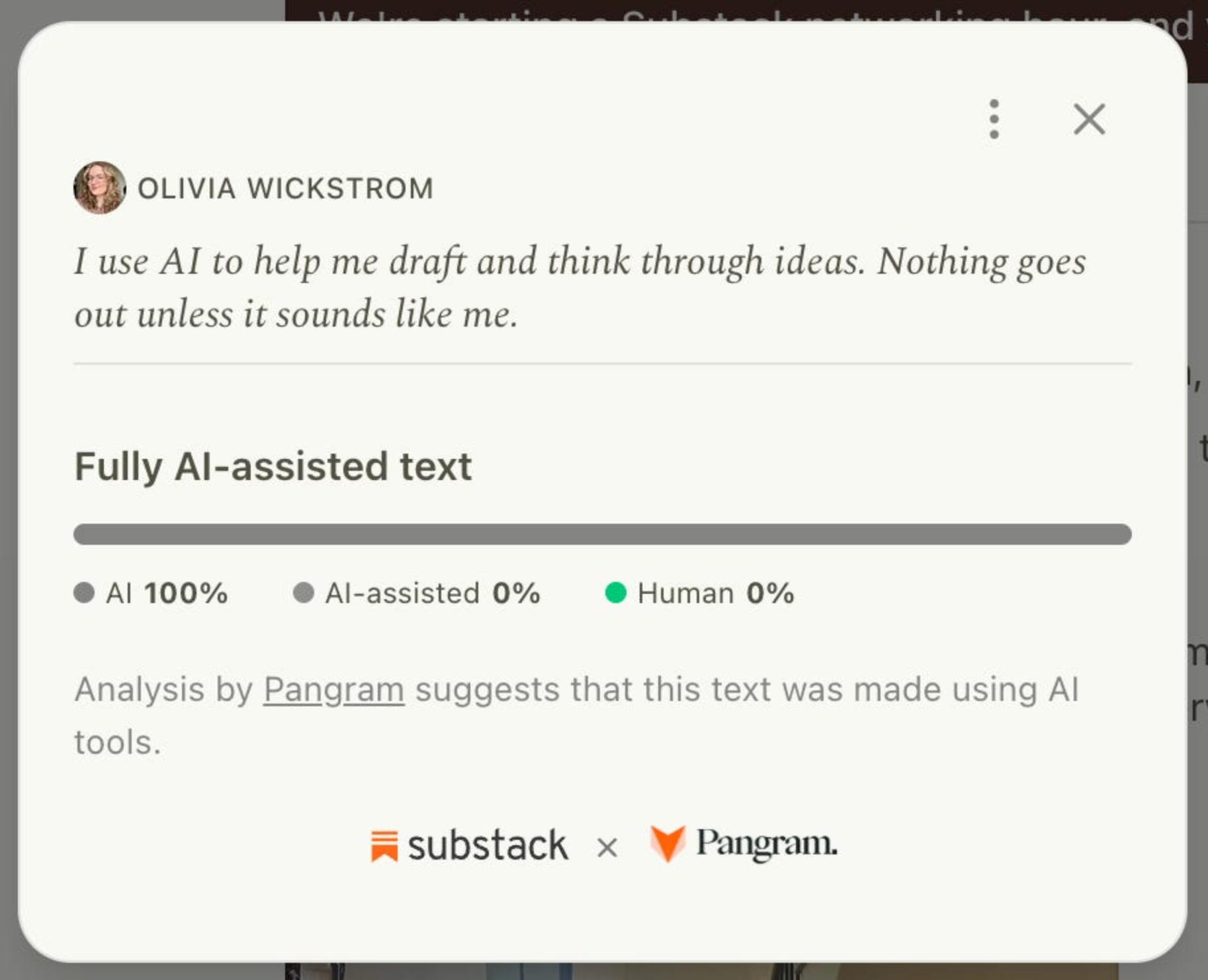
The headline of this week's newsletter jumps off the page out of the muck created by Substack's new partnership with AI detector Pangram. Apparently in an attempt to wipe out all AI slop off its platform, or as is more often the case online, turn all of its participants into finger-point nags and every ounce of content into one more exhausted and taxed effort as creators have to functionally "pay" Pangram to tell them what they already know, "I wrote this my damn self."
Substack has increasingly tried to position itself in the content universe as an antidote to LinkedIn and other "serious" social media platforms while failing to actually fulfill on that promise.
Don't get me wrong. LinkedIn continues to be a cesspool of AI slop, fake insights, and people selling LinkedIn content services to people who want to make content on LinkedIn for people who make content on LinkedIn. Nested Russian doll or circle j*rk? You decide. Pangram claims that over 40% of long-form content on the platform is AI-generated. Of course failing to carve off the other eleventy-billion percent that is just people talking about AI sounding like AI as if the only thing in the world was AI. While also flurrying up a storm of false-positives.
What a dream. What a joy. What a lovely sight.
"Is this AI?"
The "that's AI" as a broadening pejorative isn't just in the halls of high schools and middle schools across the country. Though I can attest, with a house full of teenagers, few sick burns register as hot as "that's so AI." As my son Grant says, "people who use ChatGPT are stupid." Then we have a conversation about multiple different kinds of intelligences, no one is stupid, and yes, many uses of the ubiquitous chatbots will burn your brain to a fogged oblivion.
BUT THAT'S NOT THE POINT.
Though don't tell the Commonwealth short story prize that. Once renowned as one of the most prestigious literary contests in the world, the 2026 winner was thrown into a pit of contention when online mobs claimed Jamir Nazir "wrote it with AI!" The selection committee made everyone turn in their notes and proof that their work was self-written. A reminder that literature people are not necessarily philosophy people, clearly no one raised their hand and begged the proverbial question: "Can you disprove a negative?"
Ah well. The humanities suffer an other stunning blow.
The prize has now lost its sponsor, Granta, and its clout, claiming that the author did in fact prove 100% human authorship, and the world spins madly on.
Too many people, many in my community of people who wish to build ethically, grow organically, and set the foundations of an economy that works for everyone, have found themselves sucked into the "Is it AI?" discourse.
How could they not? SEOs have been ravaged trying to defend that Google's attempt to put them out of business with AI summaries and scraped data didn't in fact put them out of business.
Content writers and journalists are now stunted into a tiny, tiny value stack where 90% of what they once did is supposedly available to anyone to do in an instant for free. (Fact check: it's not) Leaving them to wrestle for scraps at the tip top of the food chain. If you've already got the right network and the right logos on your CV, it's not terribly hard to get bookings still at larger companies and larger publications, but the fat middle where content marketing made its billions is on the maximum does of Ozempic and the results are giving.
So I don't blame anyone for raising a fist, as I have sometimes done, at the AI-ification of it all, and what we've lost in the process:
- A functioning internet
- A human network of discourse where you know you are interacting with another person's ideas
- A reasonable flow of open traffic to websites, landing pages, and blogs that could produce a reasonable flow of prospective clients
- The confidence that what you're seeing on the screen is actually what you're seeing at all.
And yet...

Beware the angry mob
AI detection is the wrong fight. It’s a virtue signal in the midst of a war for the fundamentals of how to build an economy. A rainbow logo you roll out every June 1.
And, it doesn’t work.
The internet loves a virtue signal, obsesses over moral victories, but its true passion is a witch hunt.
Substack, in a crass effort to distract from its own decay into attention-gambling slot-machine style algorithmic slop service, is feeding the exact thing it knows will buy it time to let the AI sink in and take over:
A bunch of fake villains.
It’s the platforms version of “look at those immigrants eating the dogs over there.”
We look. We scream. We point. So incensed by our need for something to hate that we miss the that no one is eating the dogs. But we got some likes as it went. All the while the guy screaming "eating the dogs" has absconded with $2.2B he didn't have before. The distraction is both the game and the method of winning it. And the internet, particularly the bot internet we will have from now until forever, is built almost exclusively for distraction.
The aggregation isn't real.
The hype isn't real.
The traffic isn't real.
The engagement isn't real.
Placebos on a rat cage nipple that will never produce a cure to what ails us.
Substack fundamentally can’t be on the side of Team Human because it put its lot in bed with attention algorithms, not relational networks. It wanted to promise you it could offer vitality, a way to juice your network past your credibility. It wanted to do what the algorithmic internet has always done - offered you visibility without the cost of vulnerability. A wholly inhuman gambit.
That doesn’t mean you have to bolt and leave the platform. If you’re there now, you have done what we’ve all done, decided being neighbors with the Millennial Epsteins, the Tate Brothers, is a cost worth paying for access. But...
The platform cannot love you.
It cannot even behave in a way that treats you as something other than data fodder for its shareholder enrichment. No matter what the CEO says.
As long as we are on the internet in its government-protected, extractive, feudalist form, we are all paying rent with our free labor and our ideas to ravenous landlords that the Middle Age fief-masters would salivate at with envy. We who continue to produce content here and there, do so to carry water from the oasis in to the desert, call a few people out of their mirage, and bring them back, to human civilization. Doing business on the web is theft or mission but it's rarely anything in between any more.
What is the real fight?
The only battle worth fighting is for economic liberty in the pursuit of social good. People free to make goods and services, trade them without a structural Silicon Valley tax on existence, own what they make and how they make it, with the freedom and ability to spread the benefits of the market they’ve made with the community they love. That’s the whole game.
A crappy little meeter that tells on your neighbor to the teacher with no evidence only a siren of shame, is not only not helping, it’s part of the problem.
As I wrote about in my book (join the launch team and get a free copy!), the game we know of as Monopoly was created in a little counter-culture community called Arden, Delaware by Lizzie Magie locked in on teaching people the failure of winner-take-all capitalism.

Arden was created by and populated by a particular brand of folks fighting for economic freedom, believing that no one's creative efforts should be taxed, using other, more creative economic structures, to create a shared societal life. The community at Arden was both deeply progressive - accepting people of all stripes and types, believing the highest form of society produced shared prosperity, and deeply conservative, eschewing big government, big corporations, and taxation.
Their experiments aren't the point. Some worked. Some didn't.
A liberty-driven, collective-good vision that produces a thriving expansion is the point. Recognizable by its commitment to experiments, shared learning, and the individual drive to create and build.
My work, my teaching, my programs both for small and solos and those we use to bolster the healthy growth of middle market knowledge and service firms, are all wrapped up in this singular vision: economic liberty for the social good.
Now, like any brief slogan, this is rife for misinterpretation. I'm aware it sounds a little like a political campaign. But underneath, what you have to understand is the proven methodology (laid out in the book) for how this happens.
- Economic liberty happens when creators, founders, and builders are free to offer services and products and create marketplaces for those products without the undue control, influence, or financial tax of feudalist systems (like Google's internet) or command-and-control governments.
- That liberty is rightly constrained by the needs of six intersecting (and often competing communities): capital, employees, existing customers, ideal future customers, partners/suppliers, and the neighborhood (people in physical proximity and the air, earth, and water we depend on).
- When markets and economies are built by intersecting marketplaces of value exchange (people buying from each other, easy flow of capital, primarily through transactions, not through asset accumulation) there is natural expansion and a resistance to the large scale extractors (monopolies, and products of corporate socialism like the big banks and SpaceX).
- Here's the kicker: None of this is primarily solved primarily by political action. Political action, because of its slowness, bluntness, and timeless conflation of power, flows out of human communities, leaders, and ventures that embody and prove the case for economic liberty. You can't hand people economic liberty through rule of law, but you can get in the way.
- The transformation of ventures into economic expanders happens as leaders themselves are transformed--reaching for their higher goals and their higher selves. This is not a therapeutic journey, but a practical one. When you seek to build something good that provides meaningful work, you yourself are formed, either by fear or by generosity.
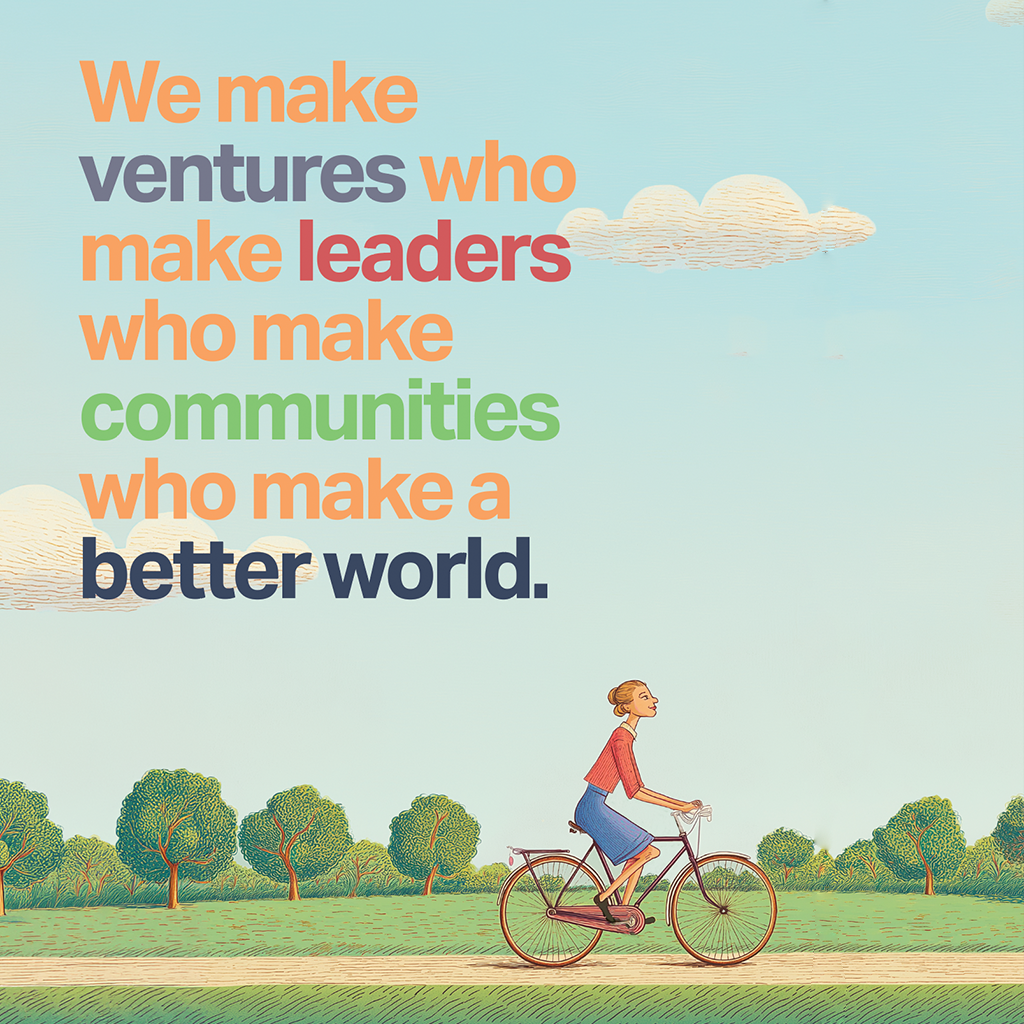
- Ventures that make leaders that make these kinds of communities are self-replicating because health is mirrored from one to the next through the minute-by-minute, day-by-day process of earning and delivering trust across the network. Trust is the only rising tide. All others depend on it. Social good is not made woke washing, that is theft. It is made by people living and building ventures with deep and abiding humanist values.
What we know about trust: it is the thing we need most right now, and it's also the thing we are struggling to find. Trust is resilient, but it's also a resource easily extracted, drilled from underneath our feet and stolen from right in front of our eyes. We have to build firms that have the SKILL, the KNOWLEDGE, the SYSTEMS, and the LEADERSHIP HEALTH to replicate trust faster than it can be stolen and poisoned.
This is the economic battle of our time.
Tomorrow at mid-day (EDT) I'm going in depth on all of this if you want to know more and understand how this works in practice. and what the systems building looks like. In your firm. Producing your economic health and growth. So you can live by your deepest values. That's the work, and I hope you'll join us for the ride.